

Used Shipping Container Types & Specifications
The complete guide to 20ft, 40ft, and 40ft HC shipping containers: dimensions, materials, strength ratings, grades, and more.

Whether you're buying your first container or sourcing a fleet, understanding dimensions, materials, weight ratings, and container grades separates a smart purchase from a costly mistake. In this complete guide, we cover everything you need to know about shipping container types and specifications, including:
- **Standard Container Sizes and Types:** Eveon offers the standard used shipping container sizes, 20ft, 40ft and 40ft High Cube.
- **Dimensions and Weight:** Compare exterior vs. interior sizes, payload capacity, and how weight affects transport and installation.
- **Materials and Construction:** Learn why Corten steel is used, what goes into the floor and walls, and how containers are built to last decades.
- **Lifecycle and Durability:** Discover how long containers last, how rust impacts strength, and what happens when a container is retired.
- **Modification Potential:** Understand all the options you can add to your container like insulation, painting, electrical, plumbing, and custom features.
Whether you’re a first-time buyer or a seasoned operator, this guide gives you all the technical details, comparisons, and expert insights you need to choose the right container for your project. By the end, you can make informed, confident decisions for your storage needs. Smarter container buying starts with Eveon Containers!
Resources to Help You Buy and Own with Confidence
Everything You Need Before You Buy
This guide was created to help you better understand used shipping containers and feel confident throughout the buying process.
Ownership, Maintenance & Warranty
This guide was created to help you understand delivery expectations, maintenance, warranty information, and long-term container care so you can get the most out of your investment.
Container Buying Quiz
Not sure which container is right for you? We’ve broken the shipping container buying process into four clear steps so you can confidently evaluate options, compare pricing, and make a smart decision.


Standard Container Types
The global shipping industry runs on a surprisingly small number of ISO Certified standardized container formats. This standardization which is still the same since the 1950’s ensures streamlined and seamless processes for loading and uploading goods globally, through ports and along highways. For land-based storage, construction, and logistics, you'll realistically encounter three primary configurations ([20ft](https://www.eveoncontainers.com/en-US/used-20ft-shipping-container), [40ft](https://www.eveoncontainers.com/en-US/used-40ft-shipping-container), [40ft HC](https://www.eveoncontainers.com/en-US/used-40ft-high-cube-shipping-container)) each engineered to solve different problems. [Eveon offers used, decommissioned containers](https://www.eveoncontainers.com/en-US/news/market-insights/container-types-we-offer-and-why) of all three sizes, retired from oceanic transport after approximately 10–13 years at sea.
**Note:** "[Conex Boxes](https://www.eveoncontainers.com/en-US/conex-box-for-sale)" and "[Metal Storage Containers](https://www.eveoncontainers.com/en-US/metal-shipping-containers)" are informal terms for the same ISO-standard steel containers described above. "Conex" originates from U.S. military use in the 1950s ("Container Express"). Today, both terms refer broadly to the corrugated steel boxes used for intermodal freight and land-based storage.
## Container Weight
### Why Weight & Dimensions Matter For Your Project
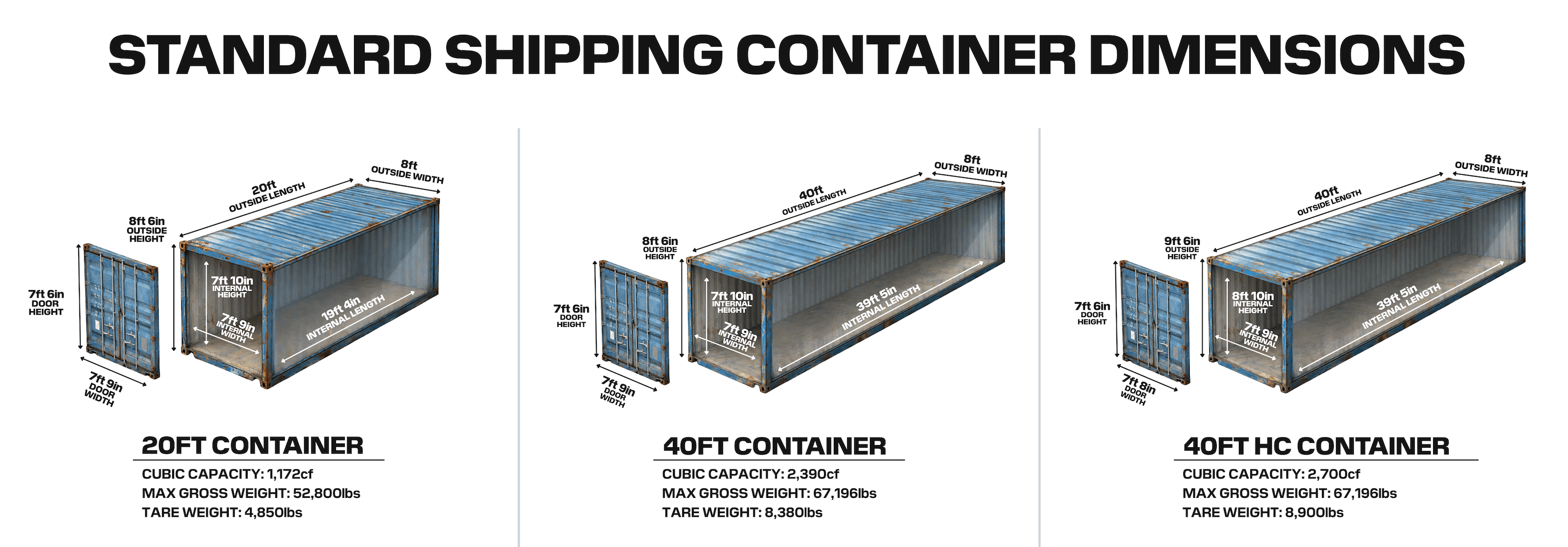
Understanding [container weight](https://www.eveoncontainers.com/en-US/news/market-insights/how-much-does-a-used-shipping-container-weigh) is essential before delivery day. A fully loaded 20ft container can weigh over 30 tons. Most residential driveways are not engineered for that load—especially if the delivery truck must drive across them. Eveon's drivers are experienced in placement logistics, but it's always worth evaluating your ground conditions, access clearance, and any overhead obstructions (power lines, trees) before booking delivery. For projects involving [stacking](https://www.eveoncontainers.com/en-US/news/market-insights/stacking-shipping-containers-maximizing-storage-and-onsite-real-estate), the corner posts of a standard container are rated to support nine full containers stacked on top. For two-high residential or commercial builds, standard containers are structurally more than sufficient.
### Standard Weight Ranges Explained
Every container specification lists three key weights: **Tare weight** is the container itself, empty. **Maximum payload** is how much cargo the container is rated to carry. **Gross weight** is the combined maximum, container plus contents. For land-based storage, you're unlikely to approach maximum payload limits, but weight matters critically for delivery: your site needs to support both the container and its contents on stable, level ground.
## Choosing the Right Container Size
The decision between a 20ft and 40ft often comes down to site logistics, the amount of real estate available, and storage volume needed. A 20ft container requires roughly 60 feet of clearance for delivery; a 40ft needs at least 120 feet. Consider your available space, your intended contents, and whether you might stack or combine units in the future.
[Shipping container dimensions](https://www.eveoncontainers.com/en-US/resources/shipping-container-dimensions) are standardized globally by ISO, meaning a 20ft container from any manufacturer will share the same exterior footprint. Interior dimensions vary slightly based on wall construction, but the figures below represent the industry-standard specifications you'll encounter at Eveon.

### 20ft Standard Conex Box
The workhorse of the industry. Compact enough to fit most residential driveways, yet offers 1,170 cubic feet of usable volume. The preferred choice for homeowners, small businesses, and anyone needing secure portable storage without a large footprint.
- Exterior Length: 20' 0"
- Exterior Width: 8' 0"
- Exterior Height: 8' 6"
- Interior Volume: ~1,170 ft³

### 40ft Standard Sea Can
Exactly double the floor space of a 20ft at the same standard height. The go-to for contractors, farmers, retailers, and anyone who needs maximum storage volume. Requires at least 120 feet of clearance for tiltbed delivery.
- Exterior Length: 40' 0"
- Exterior Width: 8' 0"
- Exterior Height: 8' 6"
- Interior Volume: ~2,390 ft³

### 40ft High Cube
One foot taller than the standard 40ft, High Cube containers add critical overhead clearance for tall equipment, vertical racking, or conversion projects like offices and workshops. Increasingly the preferred format for creative and commercial builds.
- Exterior Length: 40' 0"
- Exterior Width: 8' 0"
- Exterior Height: 9' 6"
- Interior Volume: ~2,694 ft³

## Shipping Container Colors
### How Containers are Selected
Containers are stored in large depot stacks and pulled based on size and availability. When a container is prepared for delivery, depot teams select the first available container from the appropriate stack, rather than selecting based on exterior color.
This approach allows depots to move inventory safely and efficiently while ensuring customers receive containers that meet the required performance standards.
### What We Prioritize
- **Structural Integrity:** Containers are inspected to ensure the frame, walls, and roof remain structurally sound.
- **Wind & Watertight Condition:** Every container is verified to protect contents from weather and outside elements.
- **Functional Performance:** Doors, seals, flooring, and structural components must operate as expected.
- **Fast & Reliable Delivery:** Selecting containers by condition rather than appearance helps maintain safe and efficient depot operations, allowing orders to move quickly from depot to delivery.
Types of Containers For Sale Online/Marketplace
Shipping containers available on the market generally fall into four condition-based categories that reflect their structural integrity, certification status, and intended use
- ### Wind & Watertight Containers [Wind & watertight (WWT)](https://www.eveoncontainers.com/en-US/wind-and-watertight-shipping-container) containers are used units that have been inspected and confirmed to keep out the elements, making them suitable for storage purposes but no longer certified for international cargo transport — they are typically the most affordable option and popular for on-site storage, workshops, and conversion projects.
- #### Cargo Worthy Containers [Cargo worthy containers](https://www.eveoncontainers.com/en-US/cargo-worthy-shipping-container) are a step up in quality, having passed a more rigorous inspection that certifies them as structurally sound and safe for active shipping use, making them a good choice for buyers who need a stronger reliable unit without paying new-container prices.
- #### ISO Certified Containers ISO certified containers meet the strict standards set by the International Organization for Standardization, ensuring they are fully compliant for international intermodal transport across ships, trains, and trucks. These command a premium price but offer the highest assurance of quality, uniformity, and safety for commercial shipping operations. These can be purchased for moving internationally or for oceanic transport for business. Eveon Containers does not sell these containers.
- #### “As Is” Containers Decommissioned containers, sometimes called "as-is" units, are retired from service and sold without any guarantee of structural soundness or weatherproofing, making them the least expensive option on the market but best suited only for non-critical applications like scrap use, art installations, or projects where appearance and condition are secondary to cost savings. Eveon Container does not sell “As Is” containers.

## Eveon's Limited Lifetime Warranty
All containers sold from Eveon Containers are Wind & Watertight, Guaranteed for Life, and have passed an eight-point inspection form. In the first 365 days if your container is deemed NOT Wind & Watertight, Eveon will reimburse the customer for the reasonable cost of repairs by a qualified welder, provide an industry standard repair patch so you may repair the container, or swap the container. After 366 days, Eveon will send a patch to repair the damage at no cost to the customer.
What Shipping Containers Are Made Of
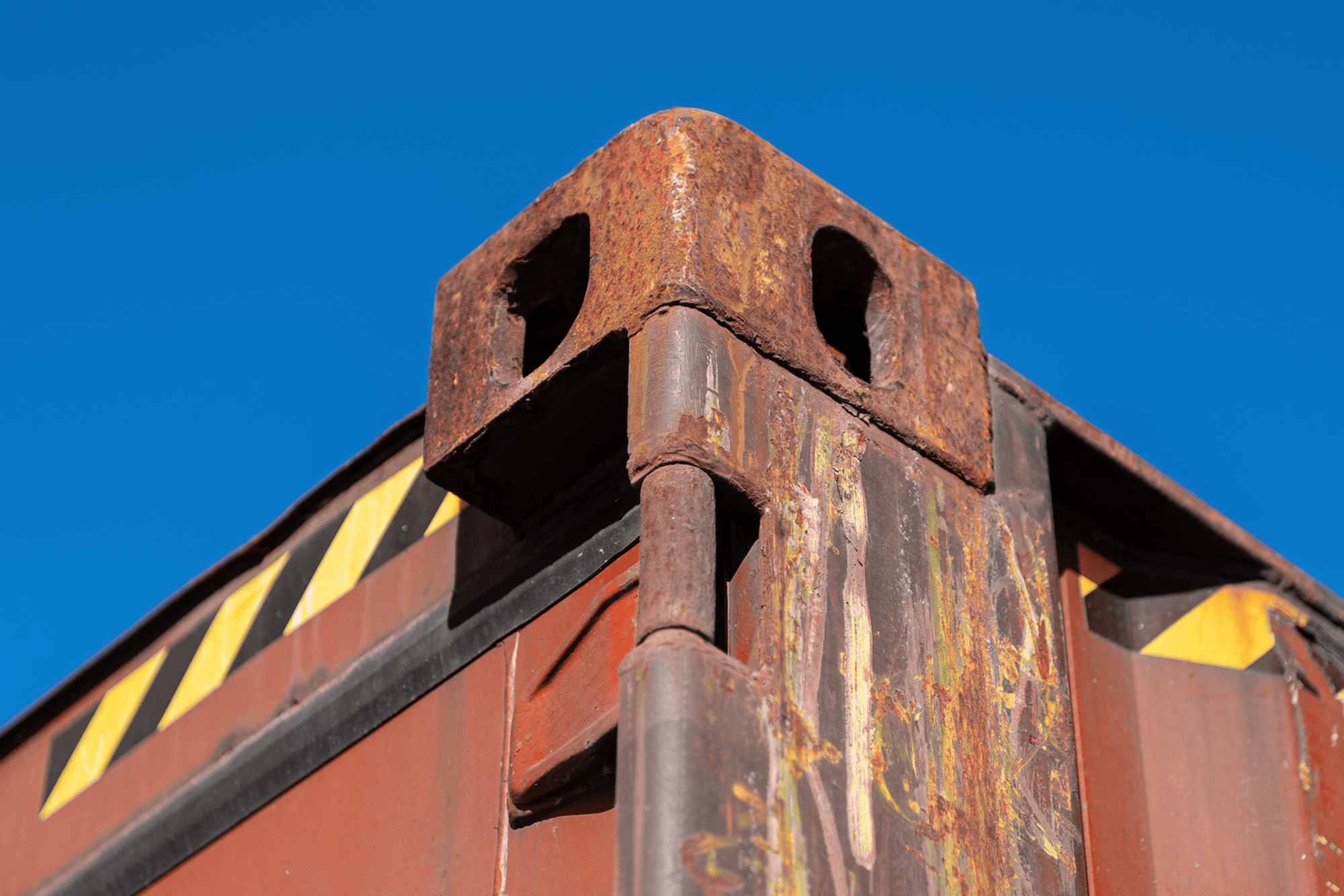
Corten Steel
The corrugated side panels, roof, and floor cross-members are fabricated from Cor-Ten (weathering steel), an alloy that develops a stable rust-like patina over time.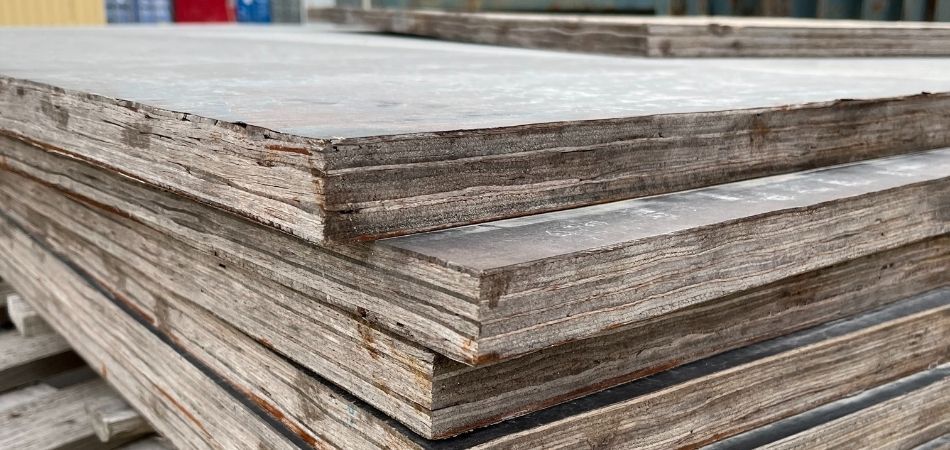
Marine-Grade Plywood Flooring
The interior floor of a shipping container is typically 1⅛" bamboo or hardwood composite plywood, pressure-treated to resist moisture, fungus, and the heavy point loads placed by forklifts and pallets.Structural Components
The skeleton of a shipping container consists of eight corner castings welded to a base frame of heavy steel I-beams and top and bottom corner rails.


Container Construction & Strength
Trusted since the 1950s’s for oceanic transport, every Eveon Container inspected, sold and delivered will have served in global supply for roughly 10-13 years. Having spent a decade-plus at sea, they are engineered to survive saltwater spray, stacking loads, and port handling. That durability isn't accidental; it comes from a precise [combination of materials](https://www.eveoncontainers.com/en-US/news/market-insights/what-is-a-container-made-of) selected for marine-grade performance. The ISO standard box is highly regarded as one of the best inventions of the last century. Its design is simple, durable and extremely reliable of protecting and efficiently moving goods.
### How Containers Are Built
[Container manufacturing](https://www.eveoncontainers.com/en-US/news/market-insights/how-are-shipping-containers-made) begins with Corten steel coils that are cut, rolled, and corrugated into panels. These corrugations aren't aesthetic—they triple the effective rigidity of the sheet without adding weight. The corrugated wall panels are spot-welded to this frame, contributing both weatherproofing and lateral rigidity. This oxidized outer layer actively protects the underlying metal, dramatically slowing corrosion. Tensile strength typically ranges between 52,000–62,000 PSI—roughly two to three times that of mild steel. It's why a used container, properly maintained can last for 25 years.
Panels are MIG-welded to a pre-fabricated corner-post frame, with the floor cross-members welded to the base rails before decking is laid. These castings are the attachment points for cranes, stackers, and twist-lock connections on ships and rail cars—rated to ISO standards for corner loads exceeding 65,000 lbs. Quality is governed by ISO 668 (size classification), ISO 1161 (corner fittings), and ISO 1496 (testing requirements)—a standardized system that ensures every container on Earth is compatible with every ship, crane, rail car, and truck chassis.
The [doors](https://www.eveoncontainers.com/en-US/news/market-insights/understanding-and-maintaining-shipping-container-doors) typically a double-leaf swing design with cam-action locking bars—are hung on heavy steel hinges and fitted with rubber gaskets. It's this door seal, combined with the overlapping roof panel, that creates the wind and watertight integrity Eveon guarantees on every container.
Eveon inspects every container to confirm the floor plywood is in good structural condition before delivery—no soft spots, no rot. For certain use cases (food storage, sensitive equipment), flooring can be replaced or overlaid after purchase.

### Rust, Weathering, & Durability
[Surface rust](https://www.eveoncontainers.com/en-US/news/market-insights/is-a-used-container-with-rust-as-strong-as-a-one-trip-container) on a used container is normal—and largely protective. Corten steel's oxidation forms a tightly adherent layer that acts as a barrier against further corrosion. What Eveon inspects for is structural rust: perforations, thinning at weld points, or compromised corner posts that could affect integrity.
A container with surface rust is still fully functional. A container with a hole is not—which is why Eveon's 8-point inspection specifically confirms that no holes exist in the frame or panels before any unit ships to a customer. To extend your container's lifespan on land, ensure drainage around the base, paint over any deep surface rust with a rust-inhibiting primer, and keep the door gaskets lubricated.
Lifecycle & Retirement
Shipping lines [retire containers](https://www.eveoncontainers.com/en-US/news/market-insights/when-is-a-shipping-container-retired) based on age, condition, and cost-of-repair calculations. Most units are decommissioned after 10–13 years, though some remain in service for 20 years. The difference matters: an older container is likely to show more wear, thinning panels, or repaired dents. Eveon sources only containers that pass our wind-and-watertight standard, regardless of their calendar age.
Engineered for Extreme Loads and Long-Term Performance
Max Stack
9 Containers High
Land-Based Lifespan
25+ Years
Average Oceanic Service
10-13 Years
Modifying & Customizing Containers
A [used shipping container from Eveon](https://www.eveoncontainers.com/en-US/news/market-insights/container-types-we-offer-and-why) is the starting point. What you do with it from there is limited only by your imagination—and your local building codes. While Eveon supplies containers as-is (wind and watertight, uninflected), the container modification industry has matured significantly, and there are established approaches to nearly every customization need.
### What Eveon Does Not Offer
Eveon specializes in the supply side: sourcing, inspecting, and delivering stand used shipping containers. We do not sell modified containers, refrigerated units (reefers), or open-top/flat-rack configurations or containers with doors on both ends. These containers are not common for oceanic transport so therefor are not in our portfolio of offered products. For modifications, we recommend engaging a licensed steel fabricator or container conversion specialist after your unit is delivered.
Common Container Modifications
Security Upgrades
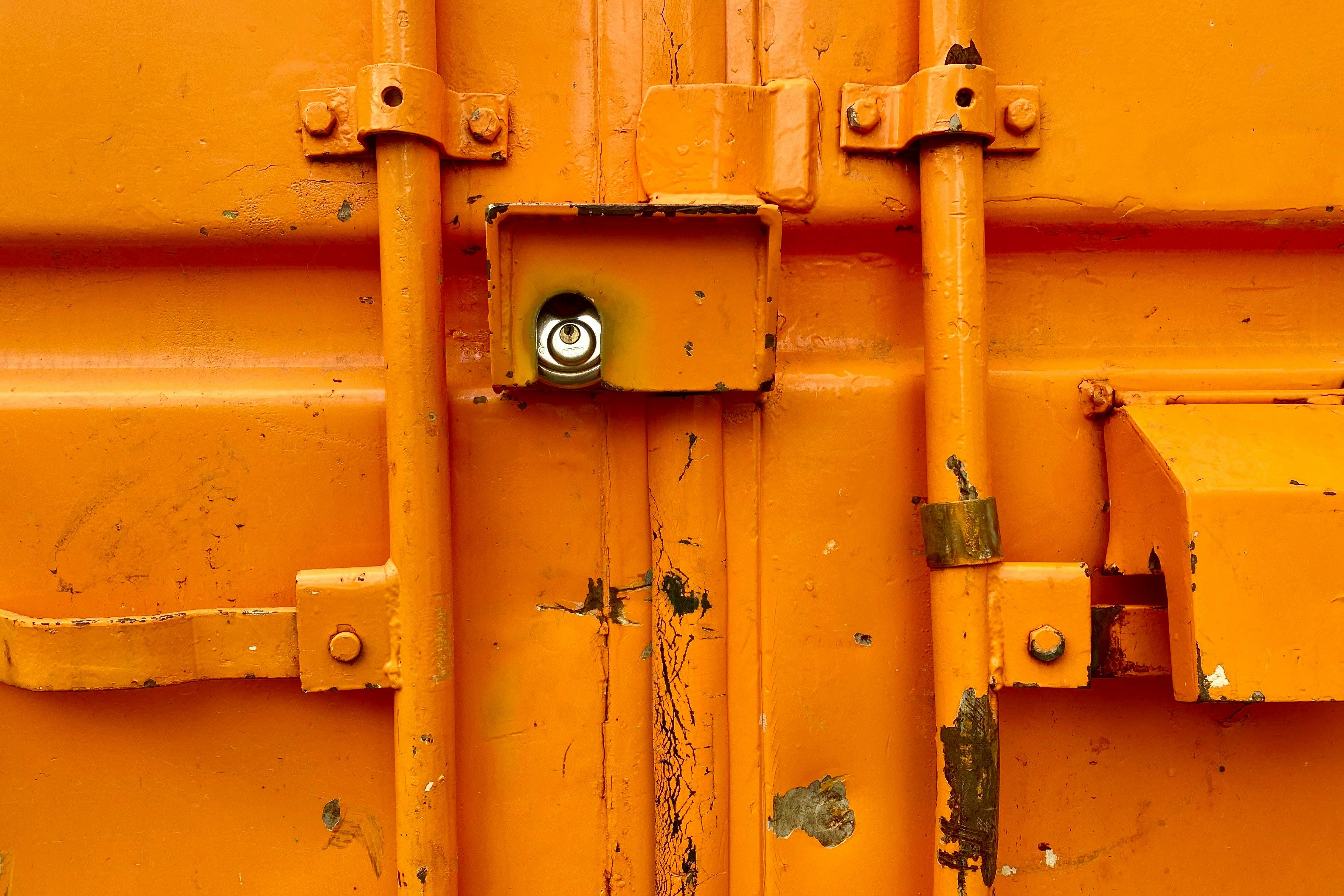
Lock boxes, internal locking systems, reinforced doors, and security bars add another layer of protection for high-value equipment or inventory.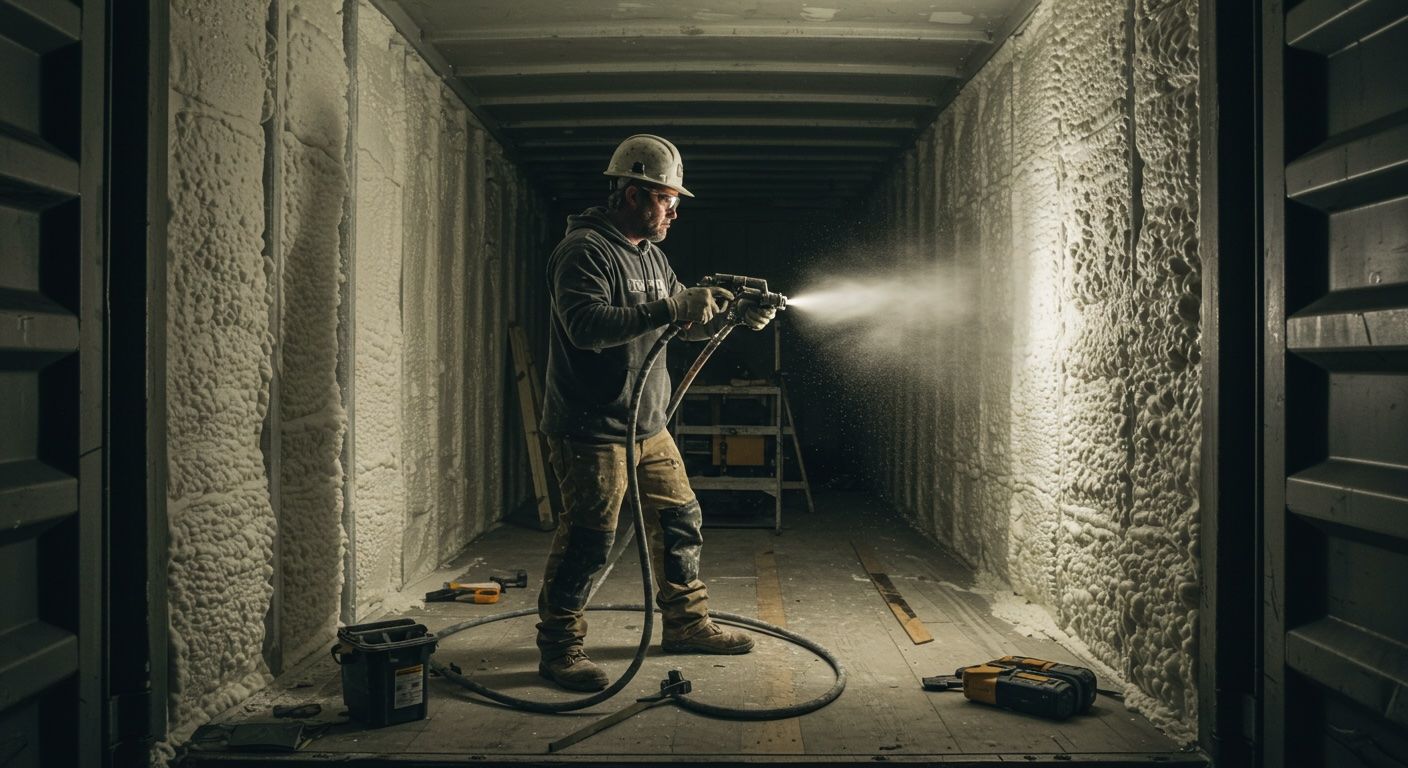
Insulation
Spray foam coats the corrugated walls conformally and doubles as a vapor barrier. Without insulation, containers experience temperature swings and condensation—problematic for electronics or documents.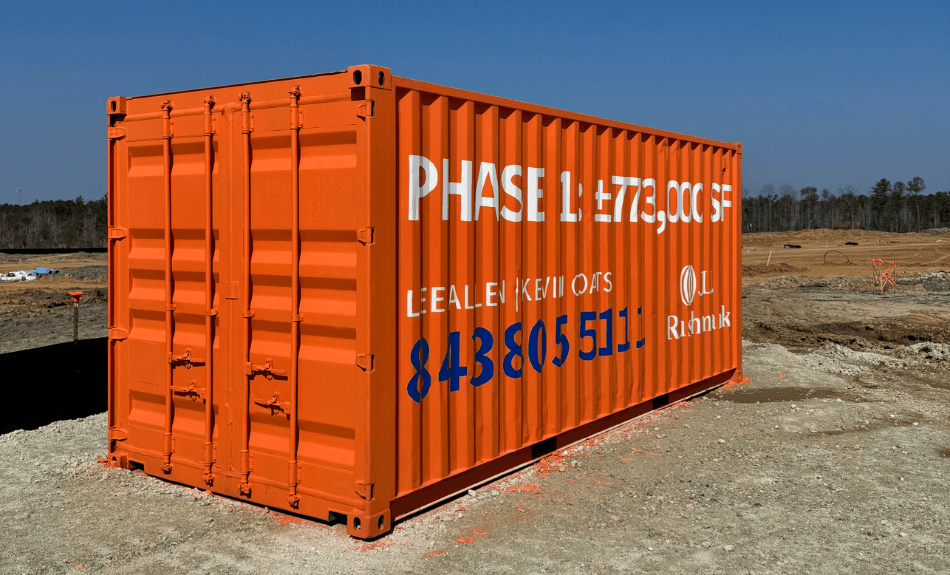
Paint
Painting gives you the ability to customize your box and create affordable, on-site advertising. The best paint depends on the container's intended use and environmental exposure.
Electricity
Electrical wiring allows your container to support lighting, outlets, and powered equipment. Running conduit along the ceiling rails, installing a sub-panel, or adding a through-wall mini-split system can be done by an electrician.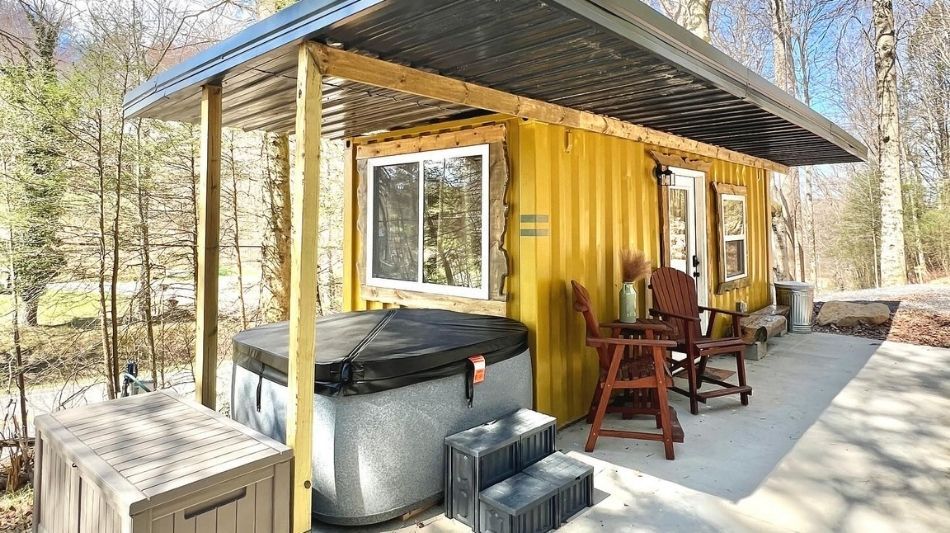
Plumbing
Containers can be fitted for water use, including sinks, bathrooms, or utility hookups. This often requires floor cutouts and routing plumbing lines before final interior finishes.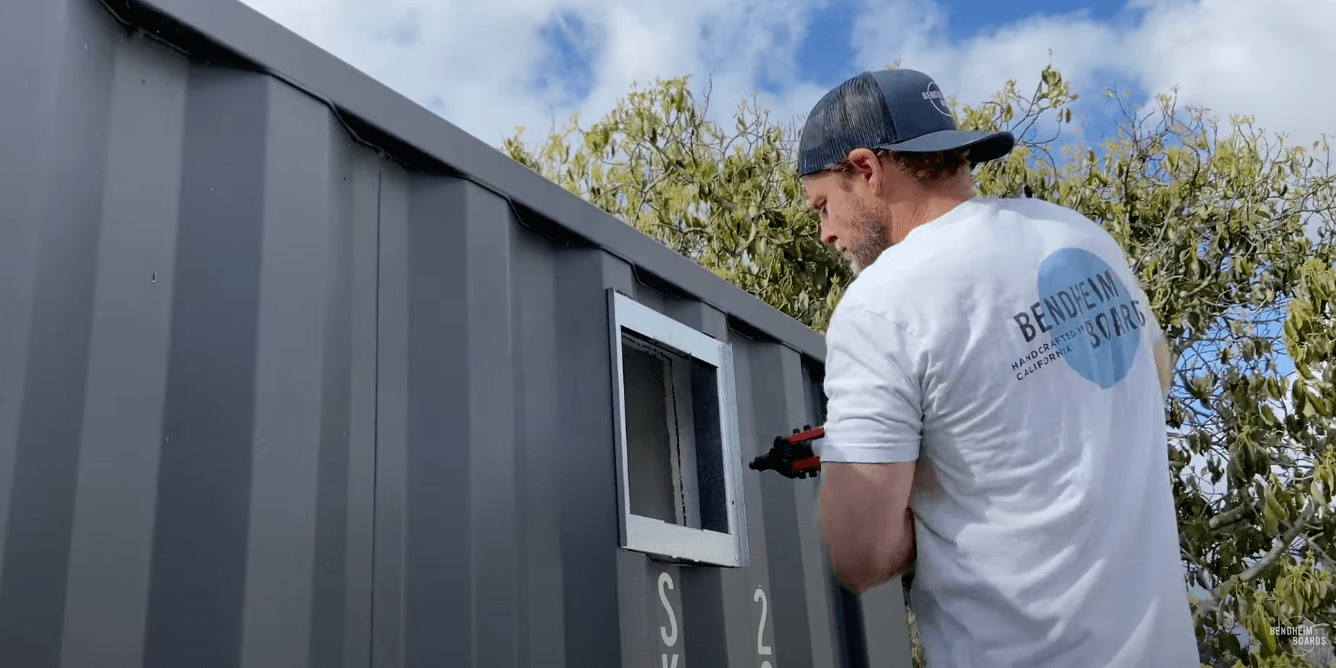
Ventilation & Climate Control
To keep interior spaces comfortable or to preserve sensitive contents, many people add vents or HVAC systems like mini-splits and louvers.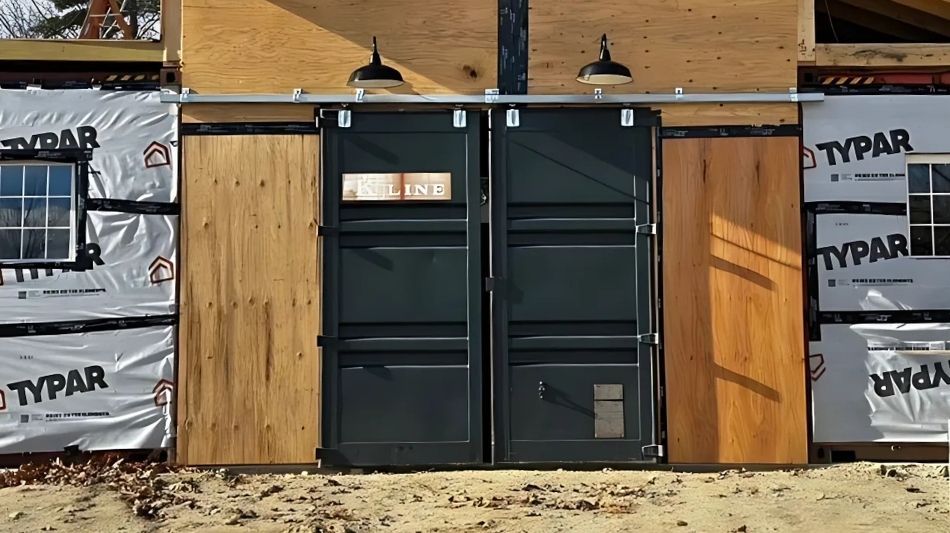
Additional Doors & Windows
Cutting extra doors or windows helps improve accessibility and natural light. Reinforced framing ensures strength and weather resistance.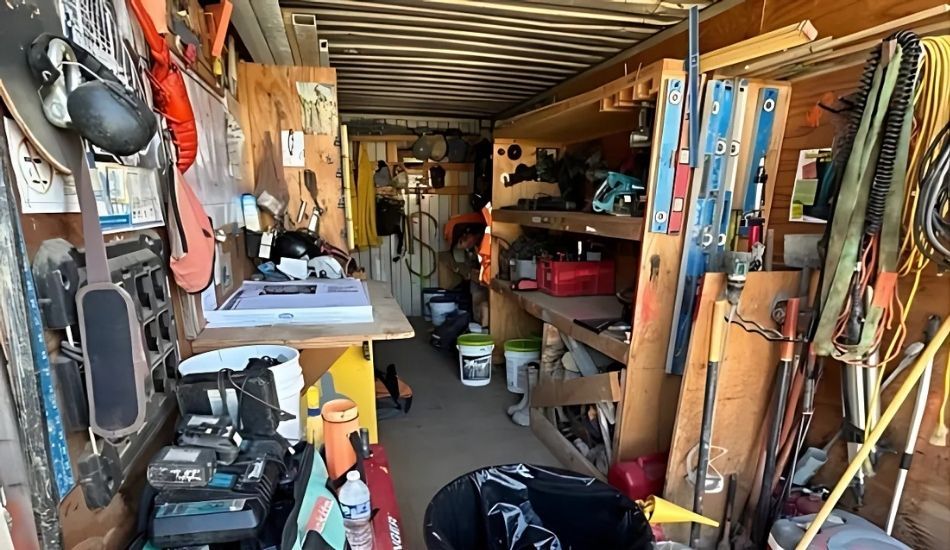
Interior Build-Outs
Building new walls, shelves, or storage systems lets you organize and customize space for work, storage, or living areas.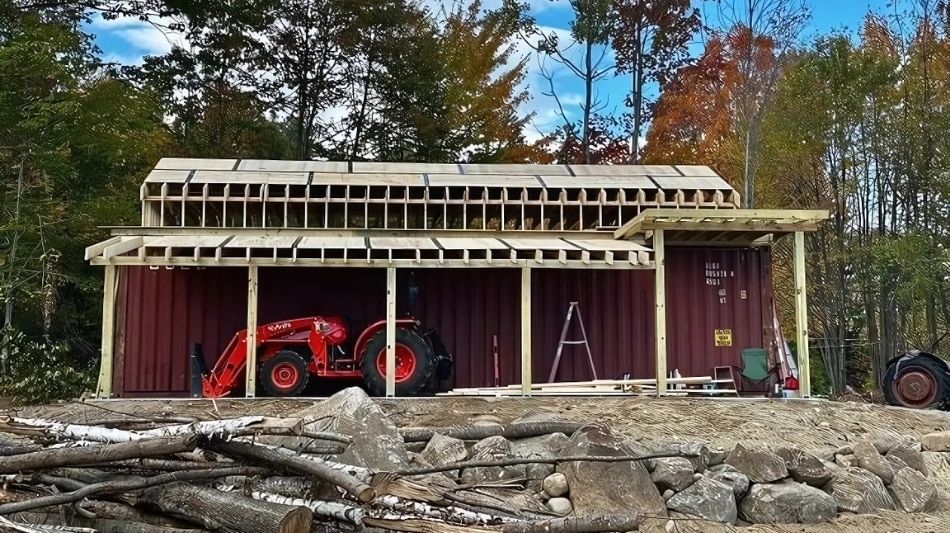
Roofing
Many owners install additional roofing structures such as sloped or extended roofs to improve drainage, create shade, or build covered outdoor zones.


Explore How Customers Are Using Eveon Containers Across Industries


Frequently Asked Questions
- At Eveon Containers, we are committed to [extending the life](https://www.eveoncontainers.com/en-US/about/sustainability) and purpose of the shipping container. For most storage applications, a quality used container performs just as effectively as a new one. By extending the life of existing containers, we help: - Reduce demand for newly manufactured units - Lower embedded carbon impact - Minimize industrial waste - Support a circular economy
- At Eveon Containers we do not offer the ability to choose the of color of your used container. We always choose quality over color. Our used containers are stored in large, packed depots and high stacks. These stacks are built up of the same type of container and with different kinds of colors. When your container is taken from the stack, it will be first WWT one available.
- One great feature of shipping containers is that they can be stacked up to nine containers high, even when fully loaded. It is advised that containers of the same size are stacked since they will be more secure. There are companies out there that have equipment to handle stacking. Please consult an expert before attempting.
- Depending on their size, a shipping containers weight will vary. Standard 20ft shipping containers have a tare weight of 4,914 lbs. Standard 40ft shipping containers have a tare weight of 8,159 lbs. Standard 40ft High Cube shipping containers have a tare weight of 8,747 lbs.
- Shipping containers, made from robust Corten steel, undergo meticulous manufacturing steps including cutting, welding, and protective measures to ensure strength and durability during transportation and storage.
- Container floors are typically constructed with marine-grade plywood, providing durability and moisture resistance. The floor features steel cross members, wooden floor joists, and treated plywood sheets.
Used Shipping Containers for Sale and Rent
Shop used 20ft, 40ft, and 40ft High Cube containers online with upfront pricing, nationwide delivery, and a wind-and-watertight guarantee.

20ft Used Container
Dimensions
Length
20'
Width
8'
Height
8' 6"
Can Fit
Contents of a 3-bedroom house
4000 pairs of shoes
10 pallets (each carrying 60 boxes)
Features
Wind & watertight
160 sq. ft. of interior floor area
1,170 cubic ft. of internal storage space

40ft Used Container
Dimensions
Length
40'
Width
8'
Height
8' 6"
Can Fit
Contents of a 5-bedroom house
Large farm machinery
20 pallets (each carrying 120 boxes)
Features
Wind & watertight
320 sq. ft. of interior floor area
2,390 cubic ft. of internal storage space

40ft Used High Cube Container
Dimensions
Length
40'
Width
8'
Height
9' 6"
Can Fit
Contents of a 5-bedroom house
1 to 2 tractors
20 pallets (each carrying 120 boxes)
Features
Wind & watertight
320 sq. ft. of interior floor area
2,690 cubic ft. of internal storage space